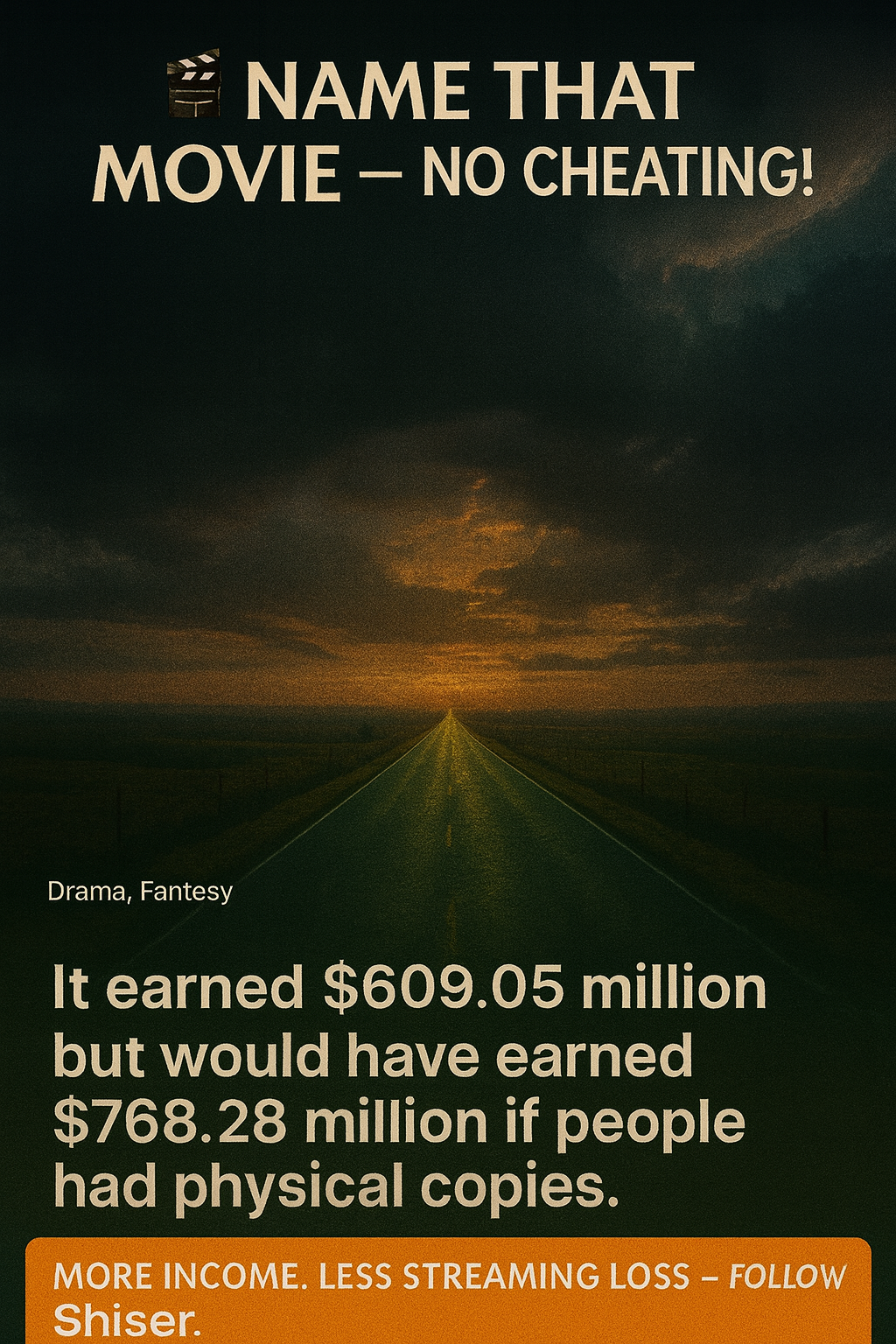
At first glance, the question is simple: Name the movie.
A globally recognised drama–fantasy, visually iconic, widely streamed, and commercially successful. It generated $609.05 million worldwide — a figure most studios would consider a win. But beneath that headline number is a quieter, more revealing reality. Revenue modelling shows that if audiences had meaningful ownership — through physical or scarce editions — the same film could have generated $768.28 million. That is a $159 million gap, not caused by weak demand or poor storytelling, but by how the film was distributed.
Streaming has redefined convenience. It has not preserved value. When content becomes infinitely accessible, endlessly replicable, and fundamentally rented rather than owned, its economic gravity weakens. Audiences watch once, move on, and leave no lasting relationship behind. Platforms benefit from scale and retention; creators absorb the cost of disposability. The result is a system optimised for reach, not revenue density — a model where popularity no longer guarantees proportional returns.
Ownership changes behaviour in ways streaming never can. For decades, physical formats created scarcity, commitment, and longevity. People collected films, revisited them, gifted them, and resold them. A DVD, a vinyl record, or a limited edition wasn’t just media — it was an asset with emotional and economic weight. Remove ownership, and content becomes transient. Reintroduce it, even digitally, and value resurfaces. That is why revenue projections climb so sharply when ownership models are factored back into the equation.
The $159 million shortfall highlighted here is not unique. It reflects a broader structural issue across film, music, and digital media. Streaming platforms monetise attention; creators are paid fractions; fans hold no stake; and content has no afterlife. The system rewards volume, not value. It scales consumption while compressing creator income.
The solution is not a return to physical media, nor a rejection of streaming. It is the restoration of ownership in a digital-first world. Digital ownership — when designed around scarcity, provenance, and direct creator–fan relationships — changes how audiences engage and how value is distributed. Fans support more intentionally. Creators monetise more sustainably. Content regains its status as something to own, not just access.
This is the problem Sniser was built to address. By enabling scarce, NFT-backed digital releases and direct-to-fan monetisation, Sniser restores ownership without sacrificing reach. Fans don’t simply stream; they participate. Creators don’t chase views; they build assets. Revenue leakage is reduced, lifetime fan value increases, and creative work gains permanence again.
Streaming is not the enemy — but access alone is not enough. The future of film, music, and digital art will not be defined by views, streams, or algorithms. It will be defined by value per fan. The real question is no longer “Name that movie.” It is how much value was lost when ownership disappeared — and who is building what comes next.